
REFLEX Mechanical Hitch
ISC ‘REFLEX’ Mechanical Hitch
Key points
#1 Adaptability with different rope types and sizes
#2 Transparent in use
#3 Rope focused design
#4 Midline device with CE certification
#5 Complex yet simple
Climbers will always have a favorite device or at least something that they are more used to and this becomes a baseline of comparison. I’m not sure if there is any need to compare it to different things but i’ll try to relate my experience over the last year and why I have chosen the REFLEX as my main tool for both sides of my two rope system.
ISC asked several Arborists to be involved in the field trails. We were given sample after sample, each one being updated and changed corresponding to feedback. Picking through and understanding feedback with most relevance to the design concept often felt like a huge puzzle but I think the depth of honesty about usability and safety issues kept the designers attentive to the needs of professional Arborists. The team reacted quickly and seriously and we were given six samples over a twelve month period, each one slightly different from the last until arriving at the final product, the REFLEX, as you see it on their homepage.
The initial impression is that it looks like a ZigZag and there was much conversation back and forth between the team about how could they create a device with even more appeal. From the beginning I realized that the REFLEX was going to be a completely different type of device and suggested that they drop the comparison from their design discourse. Still, the ZigZag shaped links do look like it and there is no getting away from that fact. ISC spent some time thinking up a number of designs and the first sample arrived in Matsumoto at the end of 2024 looking at first glance similar to a ZigZag but underneath the surface much closer to several key historical and important SRS devices.
———
Friction on the REFLEX is generated in three ways and these elements react slightly differently in MRS & SRS mode. Adding in an APEX also changes the balance of friction between the three sections. Firstly the rope is squeezed between a sheave and concave cam (1) inside the side plates. To me this emulates the design of the Hitch Hiker, where depending on rope thickness, hardness and climber weight the friction amount self adjusts. Particularly in SRS mode this first element is important in generating a lot of friction. The second element (2) sits just above the side plates and below the links. It works by pushing an elongated bar strongly into one side of the rope, which recalls the design language of the Rope Wrench. It bends the rope on descent and becomes neutral on ascent. It’s difficult to gauge what percentage of the total friction is generated where but these two elements definitively work in tandem and are key to the device being able to function by itself in SRS mode. Having the rope bending element (2) sandwiched between the upper (3) and lower (1) friction elements, both of which essentially ‘squeeze’ the rope, is novel and in my opinion a beautiful design. The third element are the links (3), and as I just stated they squeeze against the rope, and give the least amount of friction out of all three. The links are easy to operate when descending, there is no hard bite to overcome, no wrist pain, no difficulties. In MRS mode the first element, sheave and cam, naturally squeeze less against the rope which allows MRS movement to be much more fluid than any other SRS device. The same is so when an APEX is installed.
———
I use a range of rope diameters, 9mm, 9.5mm, 10mm, 10.5mm, 11mm, 11.2mm 11.5mm & 11.7mm. I tend toward hard covered parallel core lines but sometimes use other peoples rope, so find myself climbing on softer thicker lines, Kalimba, Stat-X, Cougar Blue etc. A LOV 2 functions well up to around 10.5mm. The Unicender can take over from there but will get cumbersome on the thicker and older lines, especially when new. A Hitch Climber/Rope Wrench will take all diameters but it is a nuisance to install and a long system. I had begun exploring 9mm Work Positioning lines throughout 2024 so it was a happy coincidence that not only did the REFLEX function on smaller diameter lines, that it did so without the need of additional friction was a secret that I wanted to tell the Arborist community throughout the field trails! The non-disclosure agreement kept that all shtum but I encouraged Kev and his team to look into certifying it down to 10mm. Initial, preliminary, in-house testing corresponded to my experience and ISC wanted to certify lower than 11mm with a reduced Working Load Limit. ISC’s in-house testing for smaller rope diameters and research into options for revised markings is ongoing. The device is presently CE Certified to EN12841, on EN 1891-A 11-13mm rope. Apart from the LOV2 there are no other Arborist devices specced down to 10mm and I hope that ISC can find a way to make this official in the future. In SRS mode by itself the REFLEX has a certified Working Load Limit of 140kg on 11-11.4mm and 200kg on ropes above 11.5mm. No additional friction input is needed in rescue scenarios on ropes above 11.5mm. In MRS mode and with additional friction (APEX) the certified Working Load Limit from 11mm-13mm is 200kg. Key point #1 is that the REFLEX takes all rope diameters and type in its stride, self regulating the amount of friction needed, it passes from one rope to another, fluidly and safely, freeing the climber to get on with work.
———
If tools can serve a function while not getting in the way through poor build quality and design, that is a great thing. If they can elevate the experience of work while being ‘transparent’, it is a special occasion indeed. Tools should enable yet not be the focus of this important and dangerous work, Key Point #2 is just that, the REFLEX disappears as you work. Changing between 1:1, 2:1, 3:1 systems has particular geometric design requirements that the REFLEX seemingly eats up. Throw any system and rope at it and watch as it accomplishes all with ease.
———
There is only one device comparison to the quality and low friction aspect of fairleading with the REFLEX, that of the mighty Hitch Climber pulley and more specifically the Eccentric version of it. The Treemagineers set a precedent with their smooth hot forged side plates and flared design and it puzzles me why other companies do not work harder on this aspect. From the swivel body to the pulley the REFLEX side plates have an outward facing flare, effectively giving rope a 270 degree freedom to enter into the device. Descending rope requires a certain amount of friction, too much causes the system to jam. Badly tied hitch cords and poorly designed mechanicals can hold the climber yet be difficult to disengage and manage descending speed, it becomes heavy and slow. Treemagineers & DMM’s collaboration Hitch Climber pulley faced one aspect of controlled descending, that of rope trailing over branches before entering the device. And due to the complex morphology of trees they knew rope will always want to fall away from centre and so need to create a smooth interface. I love tools that are designed with rope focus and Key Point #3 is that REFLEX’s flared side plates glow with rope focused design, keeping unwanted friction to a minimum.
———
Moving suspension points around the tree as you work is ubiquitous now. Two Rope systems make redirection easier and safer. Choosing suspension point placement is a skill in itself, as is throwing and setting rope, but a basic requirement to make the system fluid and user friendly is a device that can be installed midline in a simple and quick way. This style of climbing is becoming more popular all around the world and Key Point #4 is an easy to install midline device with CE certification.
———
The REFLEX’s static friction points are stainless steel which means a long lasting device. The swivel is designed to accept two karabiners or bridges, which is not a requirement, it gives options to climber taste and local and national regulations. There are a number of technical ways to use the swivel, which is why it is removable and replaceable. It future proofs climbing styles and I am looking forward to see different attachment point options. The links are sprung and topped off with a magnetic catch. The MRS points come pre-installed with karabiner molds to stop unnecessary rotation and cross loading. These can be removed and because of the soft edges rope can be tied directly into the lower hole. There is a small hole for SRS tending.
Seeing the design process, updates, problem solving, head scratching and many sleepless nights from Kev and his team have convinced me of the REFLEX’s design integrity. Key Point #5, having layers of subtlety yet becoming one of the worlds most straight forward Arborist tools when in use is unprecedented. I’m convinced of its worth and I’m sure you will be too. Please come over to ODSK and try one out.
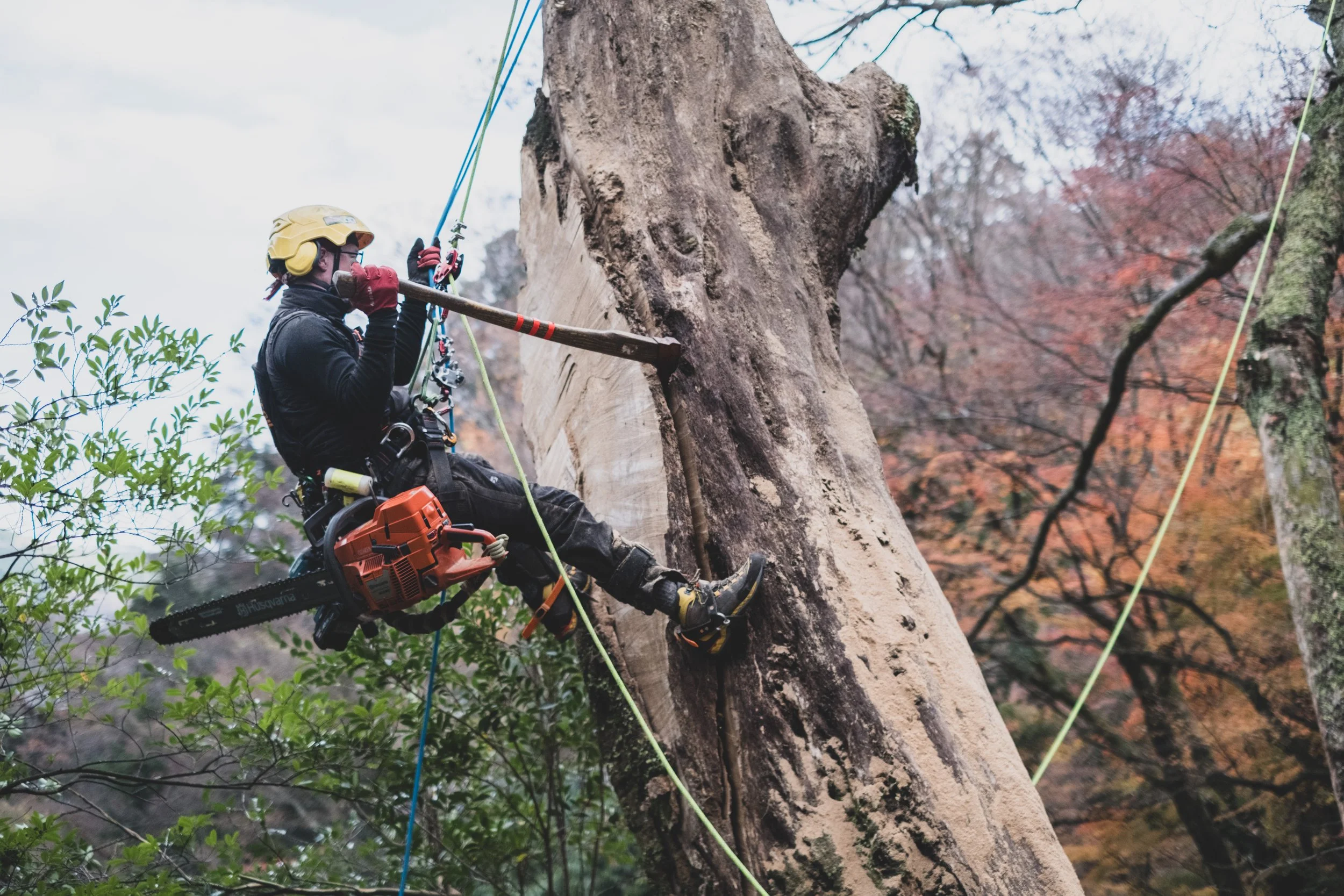
Two systems, Moving and Stationary.